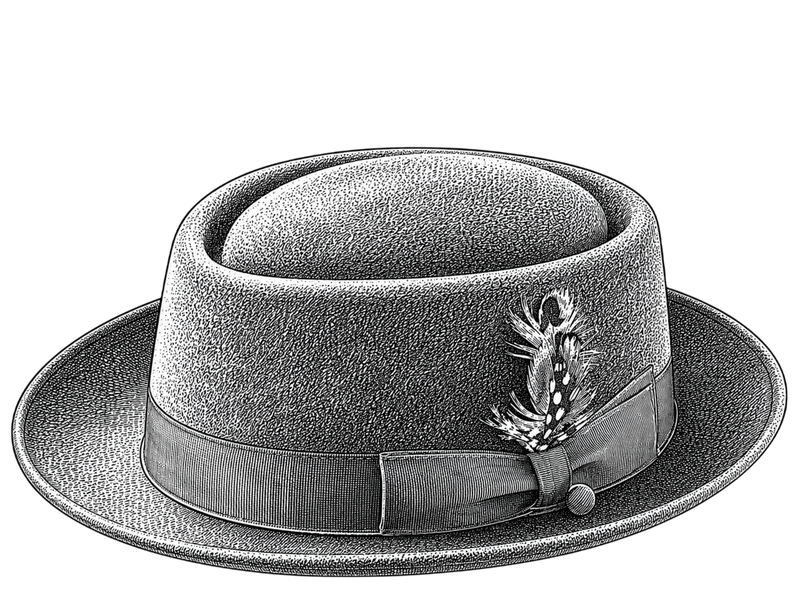
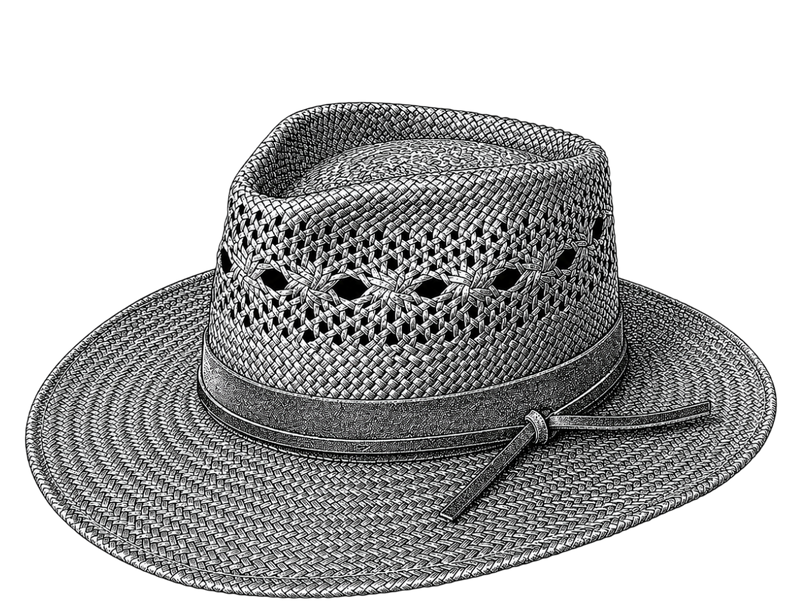
Diamond and triangle face shapes are the least frequently addressed in hat styling guides, partly because they are less common than oval, round, or square faces, and partly because the standard hat advice categories do not address them with any specificity. This gap is not helpful to the significant number of people with these face shapes who wear hats and find the generic advice inapplicable. The proportional logic for diamond and triangle faces is different from the other shapes and requires its own analysis.
Defining the Face Shapes
Diamond face: Widest at the cheekbones, with a narrow forehead and a narrow (often pointed) chin. The cheekbone width is the dominant visual measurement. This face shape has the most angular quality of the major categories.
Triangle face (also called pear-shaped): Widest at the jaw and lower face, narrowing toward the forehead. The opposite proportion to a heart-shaped face. The jaw width is the dominant visual measurement.
An important distinction from the heart-shaped face: a heart face is widest at the forehead with a narrow chin; a triangle face is widest at the jaw with a narrower forehead. Hat advice for heart faces should not be applied to triangle faces -- the proportional goal is opposite.
Hats for Diamond Face Shapes
The Styling Goal
The diamond face needs hats that address both the narrow forehead (which a hat brim over a diamond face can exaggerate by emphasizing the narrow top of the head) and the prominent cheekbones (which are already the visual focal point and need no further emphasis). The hat should add some visual width at the forehead level without adding width at the cheekbone level.
Best Hat Styles
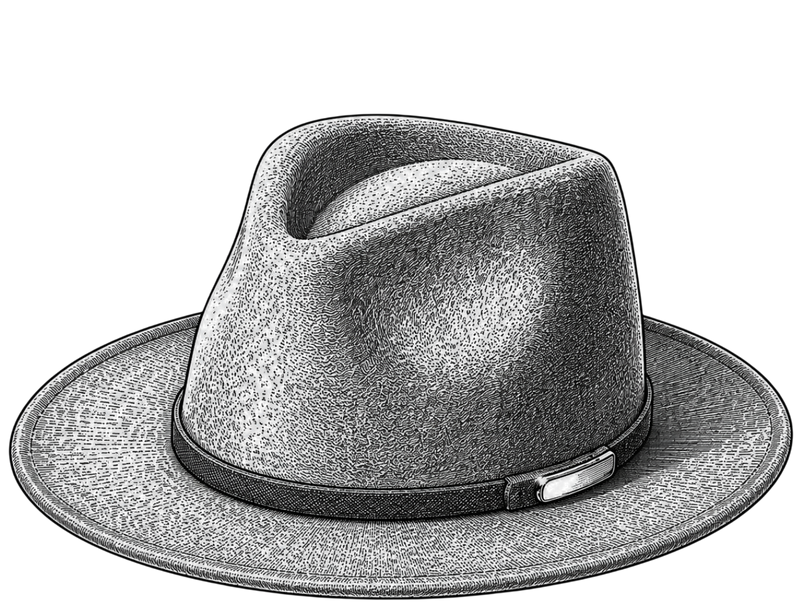
Wide-brim fedora with a level or slightly downturned front brim: The wide brim at forehead level adds apparent width at the top of the face, counterbalancing the narrowness of the forehead above the prominent cheekbones. The front brim should be level or slightly turned down to create a horizontal line that adds the width impression. A front brim angled steeply upward draws the eye upward to the narrow forehead, which works against the goal.
Cloche worn higher on the forehead: A cloche worn slightly pushed back -- higher than the traditional close coverage position -- exposes more of the forehead while the hat's dome sits above, adding width impression at the crown. The classic deep-coverage cloche position is less effective for diamond faces because it reduces visible forehead area and emphasizes the width differential between narrow forehead and wide cheekbones.
Beret with significant tilt: A beret tilted to one side adds horizontal extension above the forehead, creating apparent width at the top of the face. The asymmetric positioning adds visual interest that counterbalances the cheekbone width below. The tilt must be significant and deliberate -- a beret worn straight has primarily dome-shaped volume above the head without meaningful horizontal extension at forehead level.
What Diamond Faces Should Avoid
Narrow-brim hats (trilby, narrow-brim fedora): A narrow brim provides no width addition at the forehead level and creates a small, contained hat silhouette above the prominent cheekbones that reads as disproportionate.
Tall crowns on narrow hat bodies: A very tall crown on a hat with a narrow brim creates an elongated column above the face that emphasizes the vertical narrow quality of the forehead without providing compensating horizontal elements.
Hats for Triangle Face Shapes
The Styling Goal
The triangle face needs hats that draw visual attention upward and add apparent width at the forehead while avoiding emphasis on the jawline width. The wider jaw should be visually de-emphasized; the narrower forehead should appear broader.
Best Hat Styles
Wide-brim hat with front brim turned up: A hat worn with the front brim angled upward draws the eye upward and outward, creating a wide, sweeping line at the forehead level. This combines upward visual direction with horizontal extent at the top of the face -- both work to balance the jaw-wide, forehead-narrow proportions of a triangle face.
Full-brim hat with significant volume: A hat with a brim of 10 cm or more with a voluminous, unstructured quality -- a large floppy straw hat or a wide-brim sun hat -- adds significant apparent width at the top of the silhouette. From a standing view, the wide hat brim above the narrow forehead creates the proportion reversal that the triangle face styling goal requires.
Tall crown with wide brim: Unlike many face shapes where tall crowns add unwanted height, the triangle face benefits from the combination of tall crown (adding vertical emphasis that draws the eye upward past the jaw) and wide brim (adding horizontal width at the top of the silhouette). This is the face shape where tall-crown fedoras and cowboy hats with wide brims are genuinely well-suited.
Hats with decorative elements at the brim level: A ribbon, bow, or decorative detail at the brim level draws the eye to the forehead and brim area, which is where the visual interest should be concentrated for a triangle face. Hat decorations at crown level push visual attention upward rather than toward the face width.
What Triangle Faces Should Avoid
Hats with narrow brims that sit close to the head: A close-fitting, narrow-brim hat provides no width compensation at the forehead and leaves the jaw width as the dominant horizontal visual measurement.
Structured, tight-fitting hats pulled down close to the brow: A hat worn pulled down close to the eyebrows reduces the visible forehead area, which is the narrowest point of a triangle face. Reducing its visible area emphasizes the jaw-to-forehead width differential rather than mitigating it.
Men vs. Women With These Face Shapes
The hat categories above apply equally to men and women with diamond and triangle face shapes. The available hat styles differ between men and women's fashion -- a wide floppy straw hat is primarily a women's context; a cowboy hat is more culturally associated with men's wear. But the proportional principles are identical: both face shapes benefit from width-adding elements at the forehead level and both are challenged by narrow-brim, close-fitting hats that leave the dominant facial measurement (cheekbones for diamond, jaw for triangle) as the visual focal point.
Find wide-brim fedoras and styled straw hats suited to diamond and triangle face shapes in the Hatloom collection.
Frequently Asked Questions
What is the difference between a triangle face and a pear face shape?
They are the same thing described by different names. Triangle and pear-shaped face are interchangeable terms for a face that is widest at the jaw and narrowest at the forehead. The term pear is more commonly used in fashion and beauty contexts; triangle is the geometric description. Hat advice for both is identical.
Can diamond faces wear all hat styles?
Diamond faces handle a wider range of hat styles than many guides suggest, because the angular cheekbone width creates a face that has genuine presence and structure -- many hat styles that would be challenging on softer face shapes read as compatible with the angularity of diamond proportions. The specific styles to manage are narrow-brim hats (which provide no width at the forehead) and hats with very tall narrow crowns. Outside these, diamond faces have relatively broad hat compatibility.
What hat makes a triangle face look more balanced?
A wide-brim hat (10 cm+) worn with the front brim angled upward, combined with a crown height of 9-11 cm. This combination adds apparent width at the top of the silhouette through the brim and draws the eye upward past the jaw width through the crown height. Both effects work simultaneously to counterbalance the jaw-dominant proportions. For women: a wide floppy straw hat achieves both without requiring a structured proportion calibration. For men: a cowboy hat or wide-brim felt fedora with a classic crown crease achieves the same result.
Are there hats specifically designed for diamond face shapes?
No hat is manufactured for a specific face shape -- the proportional advantages described above emerge from general hat proportions and how they interact with face geometry. The hat buyer selects from available proportions and looks for the combination that addresses their specific face shape. A hat with a wide brim and a low-to-medium crown is not made for diamond faces; it is simply a hat that happens to provide the horizontal emphasis at forehead level that diamond faces benefit from. The selection process is about applying proportional knowledge to the available hat range.
What hat suits a man with a pear or triangle face shape?
A wide-brim fedora with a crown of 9-11 cm and a brim of 8-10 cm, worn with the front brim level or angled slightly upward. A cowboy hat with a wide brim and a classic crown is another strong option for men -- the combination of tall crown and wide brim addresses the triangle face proportional challenge effectively. Avoid trilbies, narrow-brim flat caps, and structured hats with brims under 6 cm, which provide no width addition at the forehead and may draw attention to the jaw-to-forehead proportion differential.