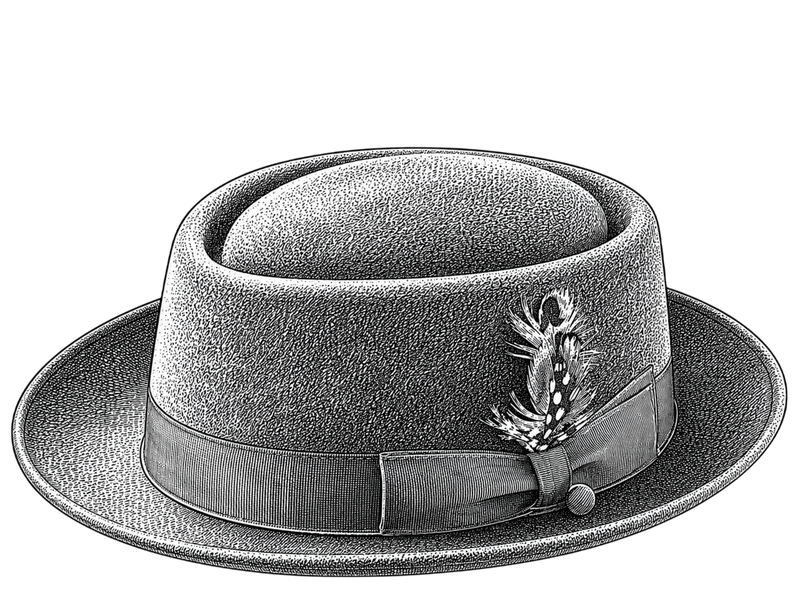
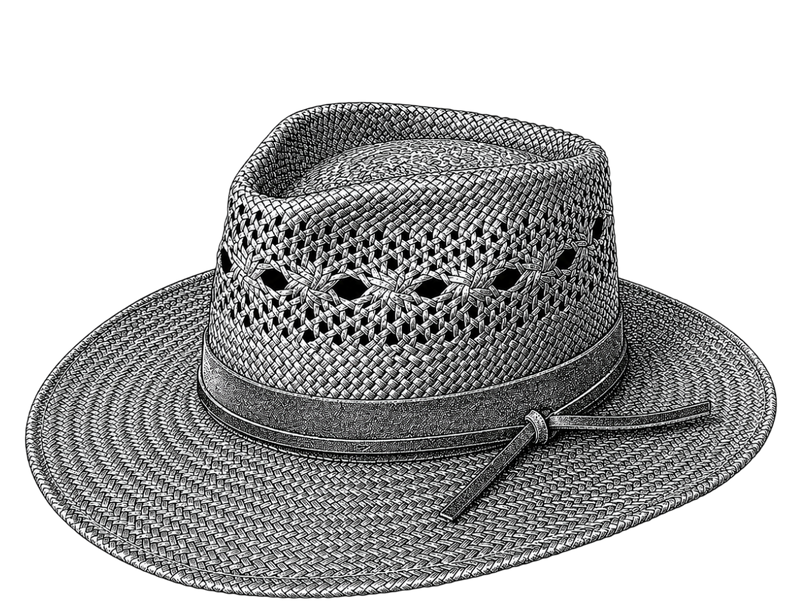
Round face hat advice is almost universally wrong. Most guides recommend avoiding round shapes and adding height — which is correct in principle and useless in practice without explaining which specific hat constructions actually achieve this effect and which ones, despite appearing to add height, actually make a round face look rounder. The details matter.
The Face Shape Problem With Round Faces
A round face has roughly equal width and length, with full cheeks, a rounded jaw, and no strong angular corners. The styling goal is to create visual contrast with these proportions — introducing angles, height, or vertical lines that make the face appear more elongated and the jaw more defined.
The two structural variables in hat design that affect this:
- Crown height and shape: A taller crown extends the visual vertical line of the face upward, making the face appear longer in proportion. A shallow or dome-shaped crown contributes width at the eye level without adding height — the worst outcome for a round face.
- Brim width and shape: A medium brim (not too wide) with an asymmetric turn — one side up, one side down — introduces angular asymmetry that contrasts with round features. Very wide, flat brims extend horizontal lines and add apparent width at the cheekbones and temples. Very narrow brims provide no counterbalance to facial width.
Best Hat Styles for Round Faces
Fedora With a High Crown and Asymmetric Brim
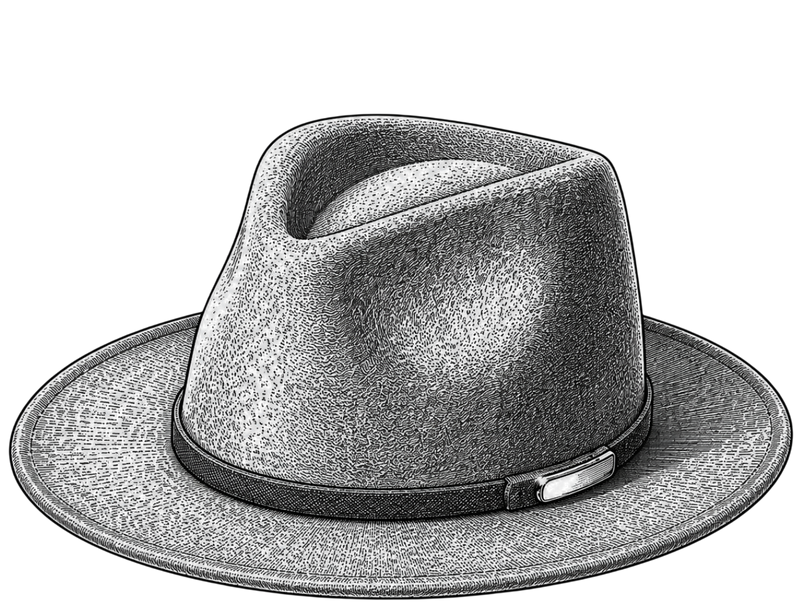
The fedora is the strongest hat choice for a round face — but only specific fedora proportions. The crown must be genuinely tall (10–11 cm minimum) with a center crease that draws the eye upward through a sharp vertical line. The brim should be asymmetric: one side snapped up, creating an angular silhouette that contrasts with the roundness of the face beneath it.
Avoid low-crown fedoras and trilbies. A trilby, with its 2–3 cm brim and shallow crown, sits visually narrow and high — creating a hat that appears to sit on top of the face rather than framing it, which emphasizes the face width by contrast.
Cloche Hat
The cloche works for round faces because of how it fits: close to the head, covering the top of the forehead and the sides of the face, it visually narrows the face by reducing the visible width at the temples. The dome of the cloche crown adds height above the face, elongating the overall silhouette. This is counterintuitive — a hat that fits closely sounds like it would emphasize a round face, but the covering-and-narrowing effect outperforms styles that sit above the head with exposed temples.
Flat Cap (Newsboy / Gatsby Style)
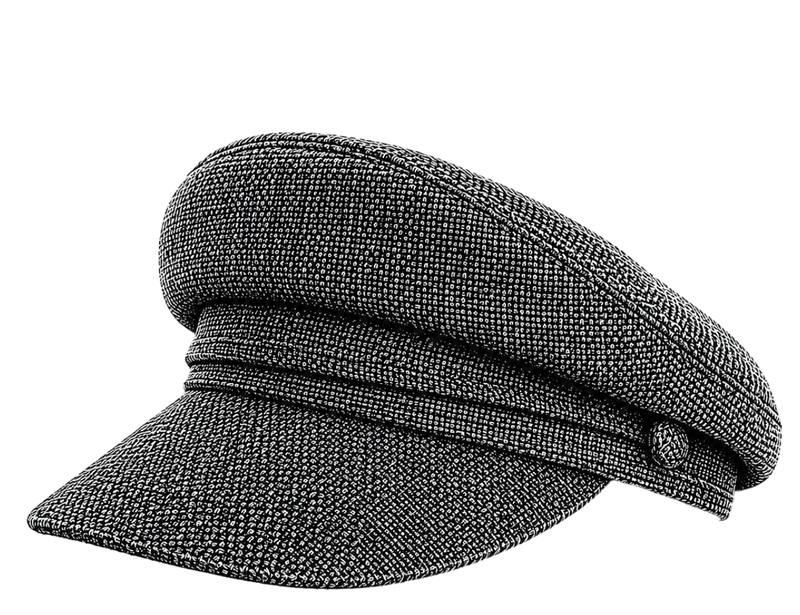
A flat cap with volume in the crown — a newsboy or Gatsby-style eight-panel cap rather than a close-fitting Peaky Blinders-style cap — works for round faces by adding height and forward projection at the crown without adding width at the brim. The visor extends forward, creating a horizontal line at the forehead that draws attention away from cheek fullness. The peaked front also creates an angular reference point against which the face reads as less round by contrast.
The slim, close-cut flat cap (the style often called a driving cap) is less successful on round faces — it fits too close to the head to add meaningful height and the narrow visor provides little angular counterbalance.
Cowboy Hat
The cowboy hat is underutilized as a round-face solution. The tall crown — typically 10–12 cm — provides significant vertical line extension. The wide brim, which would normally add horizontal width, actually works on a cowboy hat because the brim is curved upward at the sides rather than flat, which reduces the horizontal emphasis. The overall impression is more vertical than wide.
The key is brim proportion: a cowboy hat with strongly upcurved sides works for round faces; one with a very flat, wide brim (the rancher style) introduces the horizontal width problem that should be avoided.
Bucket Hat: Approach With Caution
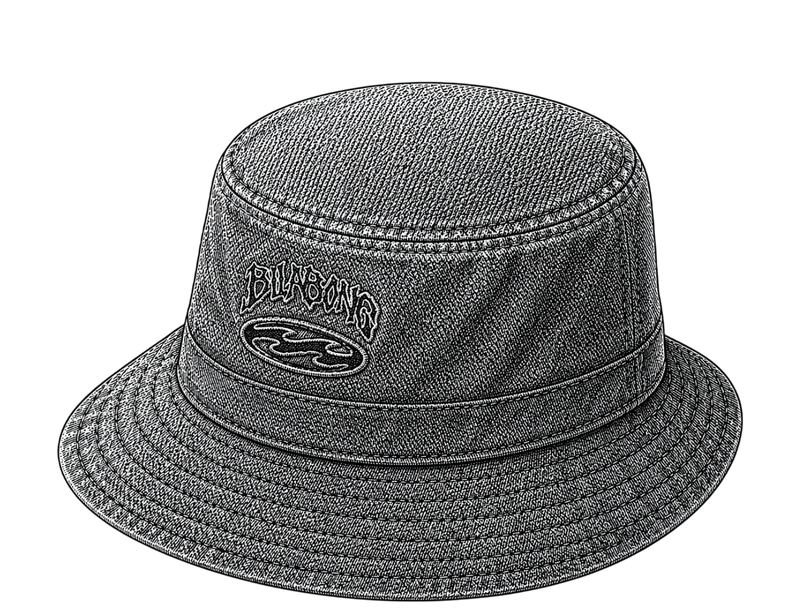
Most guides list bucket hats as unflattering for round faces, and they are mostly right — the dome-shaped crown without significant height and the downward-sloping brim create a shape that mirrors rather than contrasts with round face proportions. However, a bucket hat worn pushed back on the head (rather than pulled down to the brows) mitigates this by exposing more forehead and face, reducing the shape-matching effect. An oversized bucket hat can work for this reason — the larger crown adds more height and the looser fit pushes the brim higher on the face.
What to Avoid
Round-crowned hats: Anything with a smooth dome crown — certain beret shapes, some Panama hats with round crowns, shallow bucket hats — mirrors the round face rather than contrasting with it.
Very wide flat brims: Brims wider than 10–11 cm that sit flat add horizontal lines at eye and cheekbone level, emphasizing the widest points of a round face rather than drawing the eye upward.
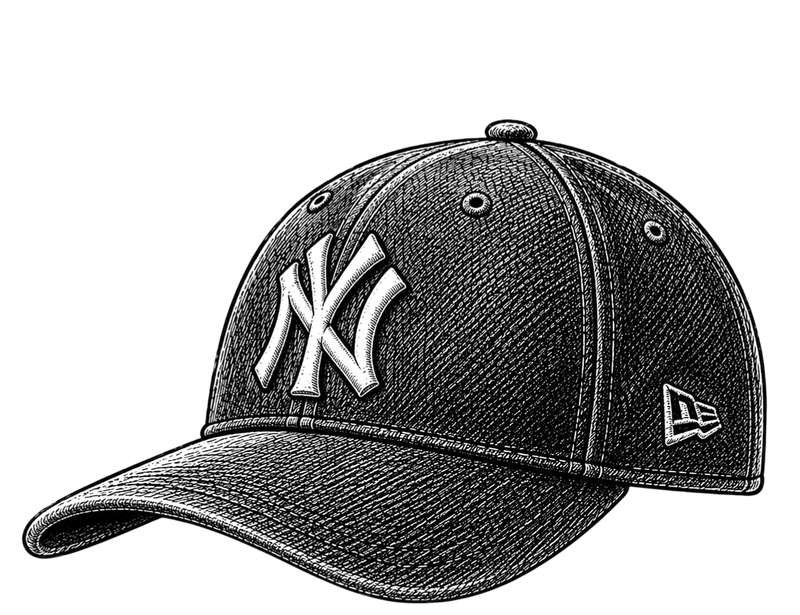
Baseball caps worn straight: A baseball cap worn level or pulled down adds dome-shaped volume above the face without adding height, and the curved brim echoes the curved jaw. Worn backward or tilted, the dome-effect is reduced and the result is more neutral.
Low-brim positions: Any hat worn very low — pulled down nearly to the eyebrows — reduces the visible face height, which makes a round face appear rounder. Hats for round faces should sit at or slightly above mid-forehead, maximizing visible face height below the hat.
Hat Color and Round Faces
Darker hat colors reduce the visual weight of the hat and allow the face-elongating silhouette to register without the hat dominating the visual field. For round faces specifically, a dark-colored hat in a flattering style is more effective than a light-colored hat in the same style — the light color draws the eye to the hat outline rather than the vertical lines within it.
Explore fedoras, flat caps, and cowboy hats suited to round faces in the Hatloom hat collection.
Frequently Asked Questions
Can people with round faces wear hats at all?
Any face shape can wear any hat — the question is which proportions are most flattering. Round faces have more hat options than is commonly stated: the fedora, cloche, flat cap with volume, and cowboy hat all work well with the right proportions. The styles to avoid are specific (very wide flat brims, dome-shaped low crowns) rather than categorical, and the workarounds for borderline styles (wearing a bucket hat pushed back, choosing an asymmetric brim) are straightforward.
What hat crown height is best for a round face?
A crown of 9–12 cm is the target range for round faces. This provides sufficient vertical line extension to create contrast with the horizontal emphasis of a round face. Crowns under 7 cm (trilby height) provide minimal height benefit. Crowns over 13 cm can become disproportionate and draw attention to their own height rather than elongating the face proportionally.
Does brim width matter more or less than crown height?
Crown height has more impact on the overall effect for round faces — a tall crown with a slightly wider brim still reads as more elongating than a low crown with a narrow brim. Brim width matters as a secondary factor: once crown height is addressed, a medium brim (5–8 cm) is more flattering than extremes in either direction. Asymmetric brim styling (one side up, one down) adds angular contrast regardless of width.
Are wide-brim hats always bad for round faces?
Not categorically. A wide brim with significant upward curl at the sides — as on a cowboy hat or a rolled-brim fedora — can work because the curved brim does not add horizontal lines in the same way a flat wide brim does. The rule is specifically against wide, flat, horizontal brims. A wide brim with shape and movement is a different silhouette with a different effect.
What should a round face look for when buying a fedora?
Three specific proportions: (1) Crown height of 10 cm or more with a defined center crease. (2) Brim between 5–8 cm — enough to provide angular contrast without excessive width. (3) A brim that can be shaped asymmetrically, with one side snapped or pinned up. Most felt fedoras allow this; very stiff felt or fixed brims do not. Try the hat at different brim angles before purchasing — the difference between a fedora that works and one that does not is often a 1–2 cm difference in crown height or a brim that will not hold an asymmetric set.