Every hat guide says the same thing about oval faces: any hat works. This is technically true and practically useless. The oval face has no structural challenge to solve — which means the entire hat choice shifts to a different set of questions: scale, proportion, occasion, and personal identity. Those decisions are harder than correcting a face shape, and they receive almost no useful guidance.
This guide addresses the actual choices oval-faced men and women face when selecting a hat.
Why Any Hat Technically Works on an Oval Face
The oval face is the closest human face shape to the geometric proportions that most hat designs assume. It has:
- Slightly wider cheekbones than forehead and jaw, creating a balanced taper
- A face height roughly 1.5x the face width — neither too elongated nor too wide
- Rounded corners at both forehead and jaw — no strong angular geometry that conflicts with hat lines
Because there is no strong geometric problem to solve, almost any hat brim width, crown height, or crease style sits proportionately. The classic guidance — oval faces can wear anything — is accurate as a statement about the absence of constraints. What it fails to address is what to choose within that unconstrained space.
The Real Decision Framework for Oval Faces
Without a structural problem to solve, hat choice for oval faces is governed by three factors:
1. Overall Body Proportion
Face shape and body proportion are separate variables. An oval face on a tall, broad frame requires different hat scaling than the same face shape on a compact frame. The hat must relate to the whole body, not just the face.
- Taller and broader frames: Can wear wider brims and taller crowns without proportion issues. The hat scale reads as coherent with the body scale.
- Compact or shorter frames: Moderate brim widths (5.5–7 cm) and crown heights (6.5–8 cm) maintain proportion. Wide-brim hats can overwhelm a smaller overall frame even when the face itself handles them well.
- Athletic or wide-shoulder builds: A hat with some visual presence — a structured fedora, a well-fitted flat cap — reads as proportionate. A very small or minimal hat can look visually insignificant against a larger overall frame.
2. Style Context and Wardrobe Register
The oval face removes the hat-selection constraint of face proportion — which makes wardrobe register the dominant variable. The correct hat is the one that belongs in the outfit, not the one that works for the face.
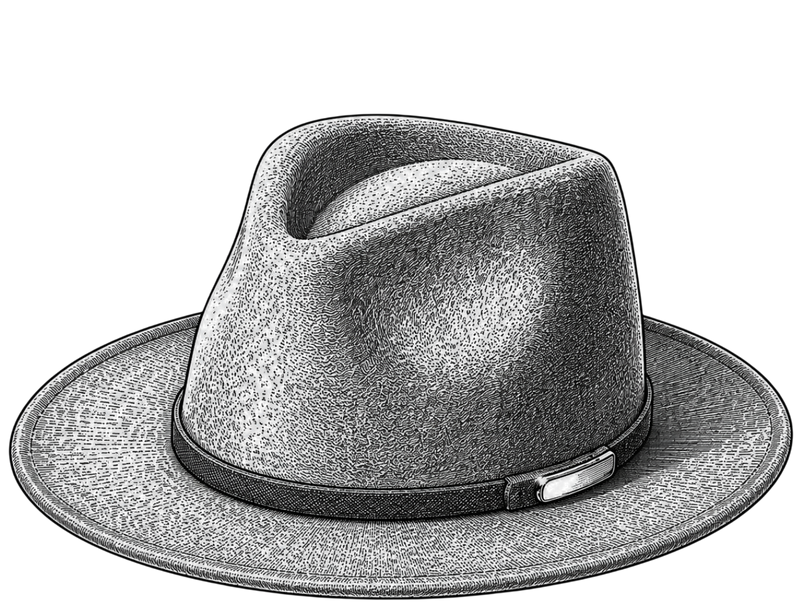
- Fedora: Smart-casual to formal. Pairs with tailored clothing, leather shoes, and considered outfits. Wrong choice for genuinely casual contexts unless the wearer is comfortable with the formality contrast.
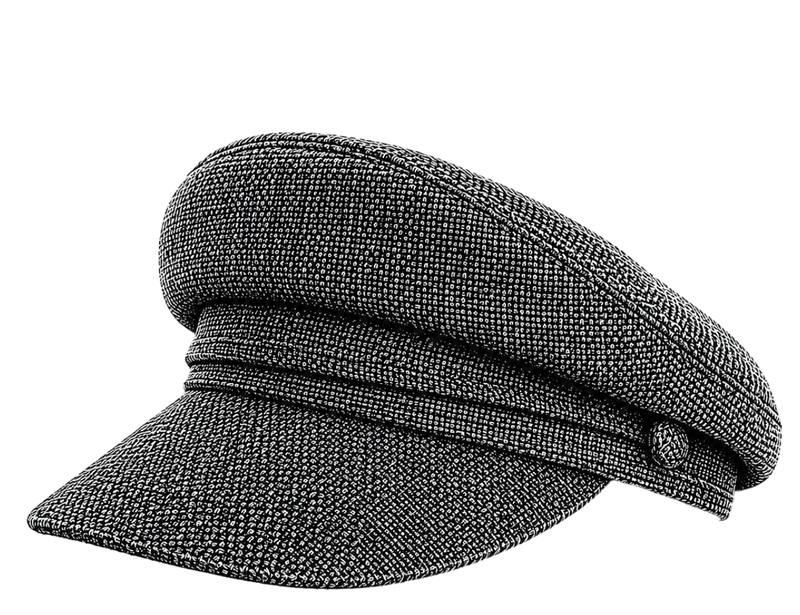
- Flat cap: Casual to smart-casual. Works with denim, trousers, knitwear, coats. More everyday-accessible than the fedora.
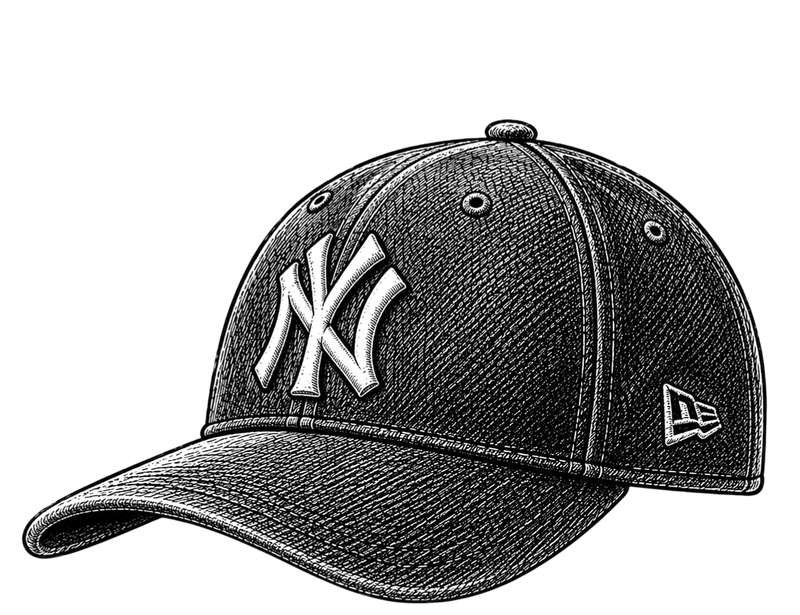
- Baseball cap: Casual only. Degrades the register of any smart-casual outfit. Correct for athletic, outdoor, and relaxed weekend contexts.
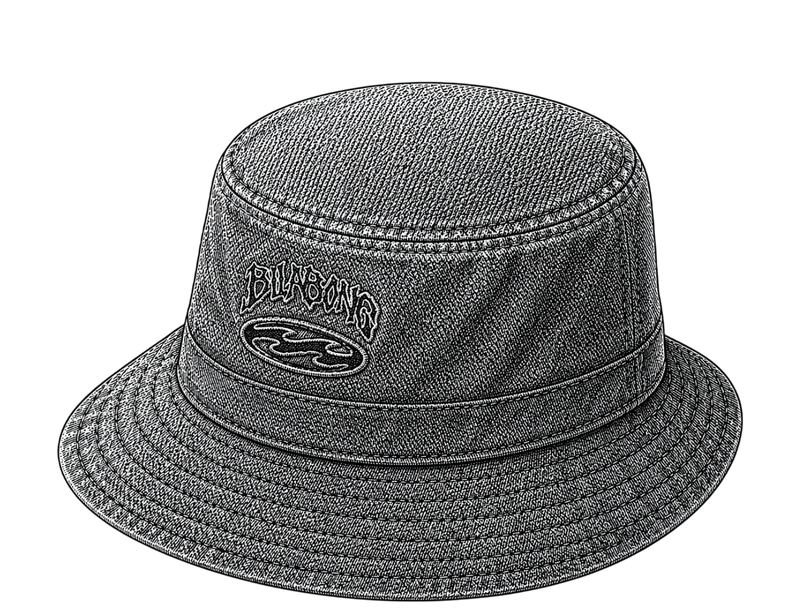
- Bucket hat: Casual to smart-casual depending on material and execution. Cotton bucket hats read casual; structured or technical fabric bucket hats can work in smart-casual.
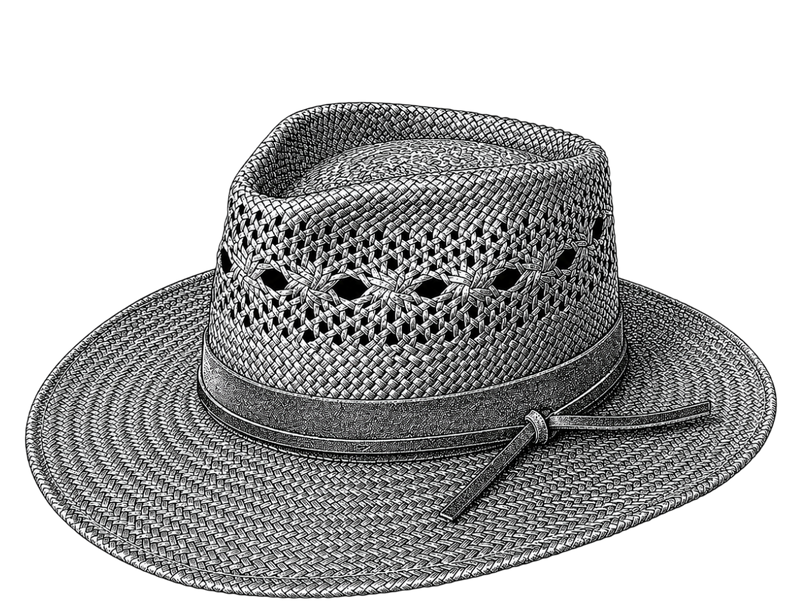
- Straw/Panama hat: Seasonal (spring/summer). Works across casual to smart-casual; dress-weight Panama hats reach into business-casual in warm climates.
3. Personal Identity Signals
When the face shape places no constraint, hat choice becomes pure identity expression. The hat style you choose signals something about how you position yourself aesthetically. This is not a problem — it is an opportunity that people with challenging face shapes do not have. The oval face can choose any hat for any reason.
The most common mistake oval-faced people make is choosing no hat, or choosing the most neutral possible hat, because the freedom feels paralyzing. The correct response to unlimited options is to make a committed choice rather than defaulting to the safest one.
Styles Worth Exploring if You Have an Oval Face
Because proportion is not a limiting factor, oval faces are the best candidates for hat styles that do not work across most other face shapes:
The Wide-Brim Fedora (8–10 cm)
A hat that creates proportion problems for oblong and round faces, the wide-brim fedora works well on an oval face. The dramatic brim reads as intentional and cinematic rather than compensatory. It is a statement choice — appropriate for specific occasions and strong personal aesthetics.
The Boater
The flat-topped, flat-brimmed straw boater has a very specific geometric profile — strong horizontal lines, rigid flat top — that can look severe on faces with strong geometric features. On an oval face, the boater reads as elegant and precise. A strong choice for summer events, garden parties, and occasions where formality with a seasonal material is appropriate.
The Homburg
The homburg — a structured felt hat with a single center crease, a rolled brim edge, and often a grosgrain band — reads as the most formally elegant hat available to contemporary men. Its stiff profile and upturned brim require a face that can carry the visual weight. An oval face handles it naturally. A homburg with a dark suit reads as the highest expression of classic menswear formality.
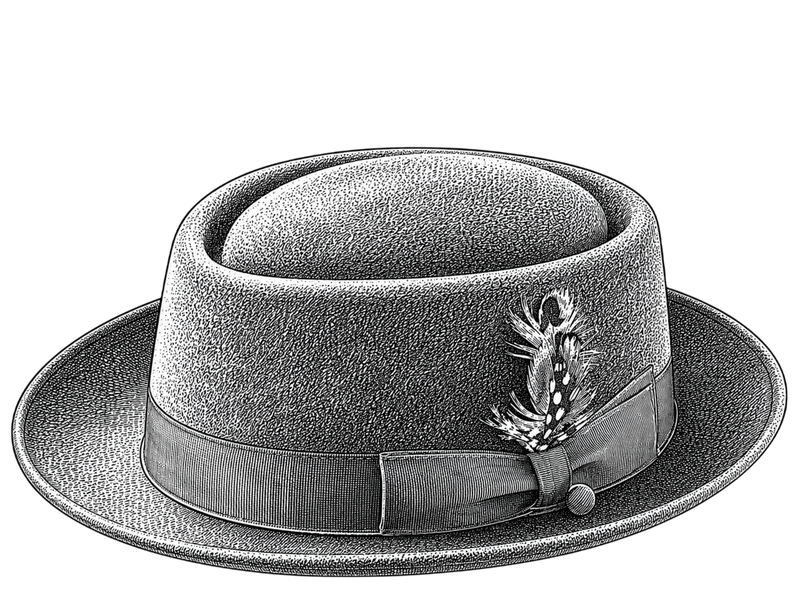
The Pork Pie
Flat-topped, short-brimmed, with a pinched or notched crown edge. The pork pie has specific cultural associations (jazz culture, ska, specific vintage aesthetics) and a strong visual presence that requires a confident wearer. The oval face handles its proportions without structural conflict.
What the Data Suggests About Oval Face Hat Choices
Insight: The most common hat purchase regret among oval-faced buyers is choosing a hat that was too small or too subtle relative to their overall frame — driven by the erroneous belief that a smaller hat is safer. On an oval face, the correct hat is the one scaled to the whole body, not minimized out of caution.
Practical metric: The brim of any hat should be visible in a forward-facing photograph without appearing to overwhelm the face. If the brim disappears behind the face outline in a photo, it is too small for the frame. If the brim extends significantly beyond the face outline, it may be too wide for the body scale.
The Complete Picture: Crown, Brim, and Color
Crown height: No specific restriction for oval faces. Choose based on hat style and occasion. Very tall crowns (9+ cm) on compact overall frames can look unbalanced — but this is a body proportion issue, not a face shape issue.
Brim width: 5–9 cm covers the practical everyday range for oval faces. Wider brims are viable for statement occasions and larger overall frames.
Color: No face-shape-specific restriction. Choose based on skin tone, wardrobe palette, and occasion. Darker neutrals (black, charcoal, dark brown, navy) are the most formally versatile. Natural and lighter tones (camel, tan, cream, natural straw) have wider seasonal range.
Explore the full range of styles — fedoras, flat caps, straw hats, and statement options — in the Hatloom collection.
Frequently Asked Questions
Do all hats really work for oval faces?
Technically yes — the oval face has no structural geometry that conflicts with hat proportions. In practice, body proportion, wardrobe register, and personal style all constrain the choice even when face shape does not. The correct hat for an oval face is the one that fits the whole outfit and the whole body, not just the face shape.
What is the most flattering hat for an oval face?
Because any hat works, the most flattering hat for an oval face is the one correctly scaled to the wearer overall frame and appropriate to the occasion. For most everyday contexts, a well-proportioned fedora or flat cap in the 5.5–7 cm brim range reads as most balanced. For statement occasions, wider brims and more distinctive styles (boater, homburg, wide-brim fedora) are fully viable.
What hat mistakes do oval-faced people make?
The most common: choosing a hat that is too small or too minimal relative to the overall body frame, driven by the belief that a smaller hat is safer. On an oval face, the correct hat is scaled to the body — if the frame is broad or tall, the hat should have corresponding presence. Undersized hats on larger frames look like an afterthought.
Can oval-faced men wear wide-brim hats?
Yes — with the caveat that brim width should scale to the overall body frame. An oval face on a taller, broader frame carries a 8–10 cm brim naturally. The same face on a compact frame benefits from more moderate brim widths (6–7.5 cm). The face shape is not the constraint; the body scale is.
What hat style is rarest on oval faces?
The homburg — a structured felt hat with a single center crease and upturned brim edge — is one of the least commonly worn styles in contemporary menswear, yet it is one that oval faces can carry without structural conflict. Its rarity is cultural (it reads as highly formal and vintage-coded) rather than related to who can wear it.