Long face hat advice is one of the areas where the generic guidance is most consistently wrong in practice. The recommendation to add width — wide brims, low crowns — is correct in principle, but most guides fail to specify which wide-brim, low-crown combinations actually produce the balancing effect and which ones merely shorten the apparent face without adding the width that makes the balance work. The distinction is measurable and predictable once you understand what is actually producing the effect.
The Proportional Goal for Long Faces
A long face has greater vertical measurement than horizontal — the forehead-to-chin distance significantly exceeds the cheekbone-to-cheekbone distance. The styling objective is to reduce the apparent vertical dominance of the face and introduce horizontal visual elements that add apparent width. A hat achieves this through two mechanisms:
- Reducing apparent face height: A low crown adds less height above the face than a tall crown, reducing the total head-and-face vertical silhouette.
- Adding horizontal emphasis: A wide, flat brim creates horizontal lines at the eye level and below, which draw the eye across rather than up-and-down.
Both mechanisms must be present. A low-crown hat with a narrow brim reduces height without adding width — the visual effect is a shorter but still narrow face rather than a balanced one. A wide-brim hat with a very tall crown adds width at the brim level but increases apparent face height at the same time — the effects partially cancel.
Best Hat Styles for Long Faces
Wide-Brim Hat With Low to Medium Crown
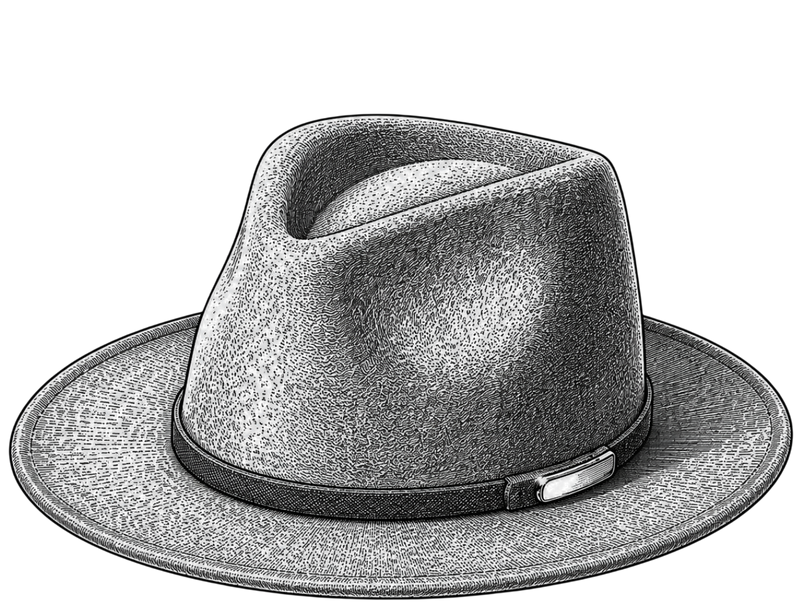
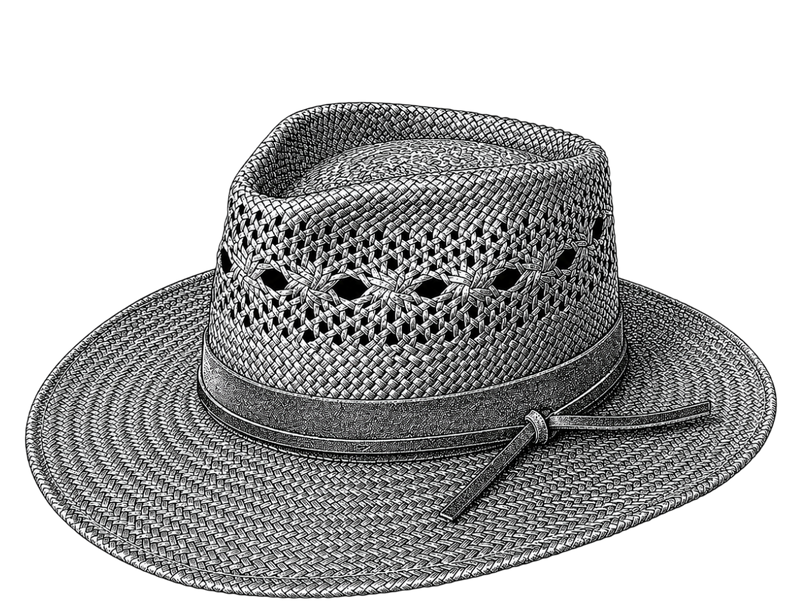
The primary recommendation for long faces: a hat with a brim of 9–12 cm and a crown of 7–9 cm maximum. The wide brim introduces strong horizontal lines; the low-to-medium crown avoids adding additional vertical height above the face. The specific crown shape matters less than the height — a low-crown fedora, a low-crown sun hat, and a low-crown Panama hat all work through the same mechanism.
The adjustment for very long faces: wear the hat with the brim level or with the front slightly turned down. This positions the brim closer to the eyebrow line, shortening the visible forehead-to-brim distance, which is where most of the apparent elongation occurs in long faces.
Floppy Wide-Brim Straw Hat
A large, floppy straw hat — the classic beach sun hat with a 12–15 cm brim — is among the most flattering hat styles for long faces precisely because of the extreme brim width. The floppy brim adds apparent width in proportion with the face length in a way that narrower brims cannot achieve. The low-structure crown typically associated with floppy straw hats also keeps the crown height minimal.
Context limitation: the floppy beach hat is appropriate for beach and resort contexts, outdoor summer events, and garden settings. It is not a city walking hat or an everyday hat. Its proportional advantage for long faces is real, but it applies only where the hat style is contextually correct.
Cloche Hat
The cloche is a counterintuitive choice that works well for many long faces: by fitting close to the head and covering a significant portion of the forehead and temples, it actually shortens the visible face without adding height above it. The dome of the cloche crown is moderate in height, and the downward-sloping brim that characterizes most cloches adds horizontal emphasis below eye level.
The proportion that makes it work: the cloche reduces visible face height by covering the upper forehead, which compresses the vertical measurement the eye registers. This is the covering-and-narrowing approach — different from the wide-brim approach, but arriving at a similar result through a different mechanism.
Beret With Horizontal Tilt
A beret worn tilted significantly to one side extends horizontally well beyond the head on the angled side, creating a strong horizontal line above the face that adds apparent width. The beret crown is low (no vertical height addition), and the horizontal extension can be pronounced — much more so than any brimmed hat. A quality wool beret worn with a significant tilt is an effective long-face option that is also seasonally versatile (appropriate for autumn through spring in wool; lighter versions for summer).
The key is the tilt degree: a beret worn straight on the head adds dome-shaped volume without the horizontal extension effect. The horizontal styling must be deliberate and significant — not a slight lean but a genuine tilt to one side.
Flat-Brim Baseball Cap
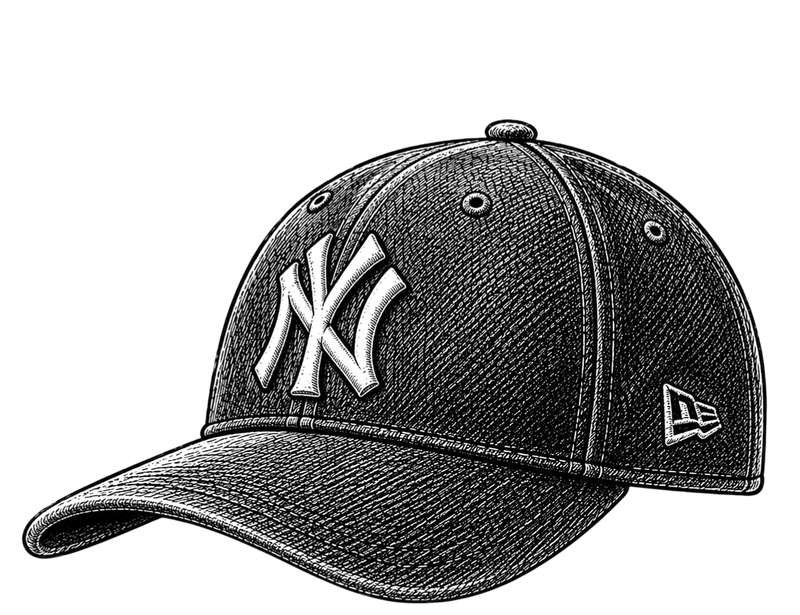
A baseball cap worn with a flat brim (not curved) and a structured, medium-height crown is a useful everyday hat for long faces in casual contexts. The flat horizontal brim creates a defined horizontal line above the face; the moderate crown does not add excessive vertical height. The key is the brim flatness: a heavily curved cap brim emphasizes the curvature rather than the horizontal line and reduces the width-adding effect. Many cap wearers with long faces deliberately keep the brim flat or add only very slight curvature for this reason.
What to Avoid
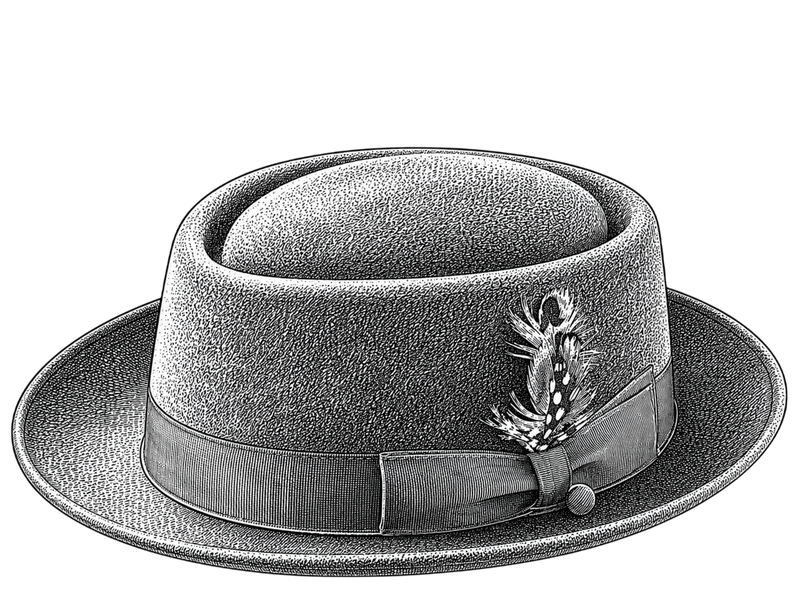
Tall-crown hats: A crown height above 10 cm adds significant vertical height above the face, extending the apparent face length upward. The fedora crown crease can be lowered by adjusting where the crease sits on the crown — choosing a lower crease position reduces effective crown height and is worth trying before dismissing the fedora as a category.
Narrow brims (under 5 cm): A narrow brim provides no horizontal width addition and does not interrupt the vertical visual line of the face. A trilby, which has both a narrow brim and a low crown, is particularly problematic for long faces: it reduces height without adding compensating width, resulting in a short but still narrow visual impression.
Rounded crown shapes without brim compensation: A beanie worn pulled straight down provides only dome-shaped vertical extension. For casual cold-weather hat-wearing with a long face, a beanie worn pushed back on the head (exposing the forehead) or with a fold-up cuff that raises the brim height is more favorable than the standard close-pull position.
Find wide-brim fedoras, sun hats, and cloches suited to long faces in the Hatloom collection.
Frequently Asked Questions
Do wide-brim hats always suit long faces?
Wide-brim hats with low-to-medium crowns suit long faces well. Wide-brim hats with very tall crowns are more mixed — the width benefit at the brim is partially offset by the height addition at the crown. As a working rule: if the crown height is greater than the brim width, the vertical emphasis wins. If the brim is wider than the crown is tall, the horizontal emphasis wins. Choose hats where brim width exceeds crown height for the most flattering result on a long face.
What brim width is best for a long face?
8–12 cm for everyday hats. Below 8 cm, the horizontal line is present but not strong enough to significantly balance the vertical face length. Above 12 cm, the brim becomes impractical for everyday wear — appropriate for beach and outdoor events but not for regular use. For event-specific hats (races, garden parties, weddings), 12–15 cm or wider is appropriate and creates the most dramatic balancing effect.
Can people with long faces wear fedoras?
Yes, with proportion management. The classic fedora with a very tall crown (12 cm+) and a narrow snap brim emphasizes vertical lines — not ideal for long faces. The same fedora silhouette with a lower crown crease, a wider brim (7–8 cm), and the front brim angled level or slightly downward is a different proportion equation that works much better. The category (fedora) is not the problem; the specific proportions are the variable to adjust.
Is an oval face the same as a long face for hat-fitting purposes?
No. An oval face is the idealized balanced proportion — longer than it is wide, but in proportions that are generally considered balanced and harmonious. Most hat styles suit oval faces naturally. A long face is distinguished from an oval face by the degree of vertical dominance: a genuinely long face has face length significantly exceeding cheekbone width, often with a higher forehead or longer chin distance than oval proportions. The hat-fitting guidance for oval faces (most styles work) differs substantially from long face guidance (specific width-adding approaches required).
What hat works for a long face in winter?
A wide-brim wool felt hat is the primary answer — warmth, weather resistance, and proportional benefit in a single object. If warmth is the priority and structure is secondary, a beret worn with significant tilt to one side is the best cold-weather option. Avoid standard-fit beanies pulled down on the head — they emphasize the vertical silhouette. A cuffed beanie with the cuff worn wide (maximizing horizontal brim line) is a better cold-weather casual option than an uncuffed version for long faces.