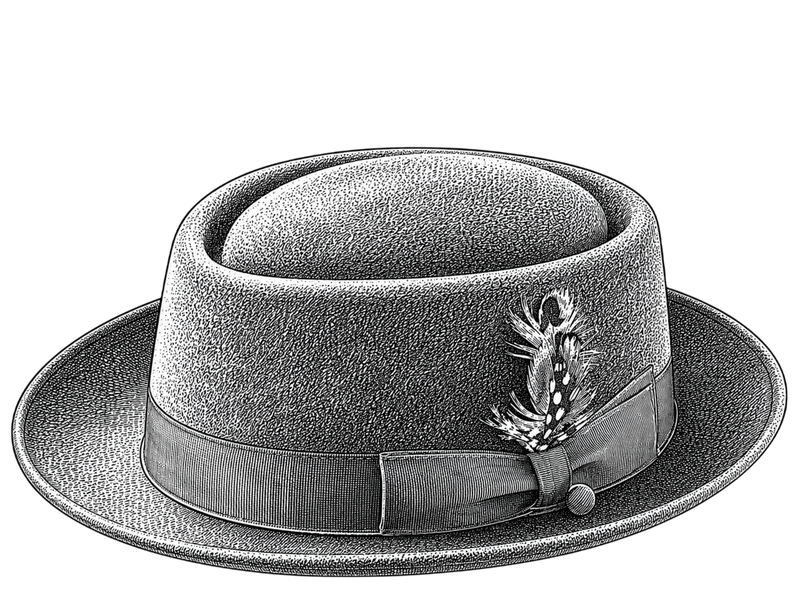
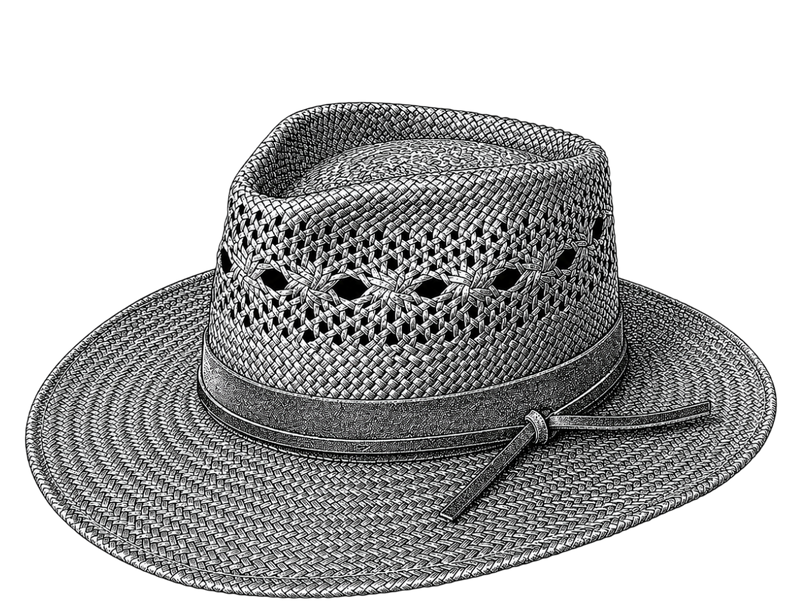
Hat advice almost always focuses on face shape. This is useful but incomplete -- a hat sits on the head, which sits on a body, and the full vertical silhouette determines how the hat reads visually. A hat that is proportionally correct for a face shape may be visually imbalanced against a specific body type. Getting both right requires thinking about proportion at the full-body level, not just the face level.
How Hat Proportions Work With the Body
The key principle is visual balance: the hat's scale should relate to the body's scale rather than fighting against it. A very large, wide-brim hat on a very petite frame creates top-heaviness -- the hat dominates the body beneath it. A very small hat perched on a tall, broad-shouldered frame reads as undersized. Neither is wrong in absolute terms, but both create an imbalanced visual impression that is different from a hat that relates naturally to the body carrying it.
Two dimensions matter:
- Hat width relative to shoulder width: the hat brim should not be dramatically wider than the shoulder line. When the brim extends significantly beyond shoulder width, it creates a visual funnel or cone shape that emphasises the narrowing from hat to body below. When the brim is roughly aligned with or narrower than the shoulder width, the hat anchors the outfit without dominating it.
- Hat height relative to total body height: a very tall crown on a short frame adds height -- which is either desirable or adds excess. A low-crown hat on a very tall frame reads proportionally smaller than the same hat on a shorter wearer.

Petite Frames
A petite frame (under 163 cm, with narrow-to-medium shoulders) interacts with hat proportions most sensitively:
- Brim width: a brim wider than approximately 8-9 cm begins to compete with the body's width. Medium brim widths (5-7 cm) work best; the brim aligns with or sits inside the shoulder line.
- Crown height: a moderate to medium crown (8-11 cm) adds a small amount of apparent height without being proportionally extreme. A very tall crown on a petite frame looks like a hat that is too large for the wearer -- the crown's height dominates the face.
- Hat scale generally: medium-sized hats in all categories. A small fedora rather than an oversized fedora. A medium-brim Panama rather than a wide western brim.
- What works well: the beret (no brim, adds height without width), the small-to-medium Panama, the fitted flat cap, the cloche (which reads well on petite frames because its close fit follows the head shape rather than projecting away from it).
Tall and Slim Frames
Tall frames (over 178 cm) with slim shoulders can wear a wider range of hat proportions because height compensates for width:
- Brim width: a wider brim (7-10 cm) works because the height of the body below provides context for a hat with visual spread. A very narrow brim on a tall frame can look undersized -- the hat appears to float above a long expanse of body without anchoring it.
- Crown height: a tall frame can carry additional crown height better than a petite frame, but extreme crown heights (above 14-15 cm) can look visually elongating beyond a natural proportion. A moderate to tall crown in the 10-13 cm range reads well.
- What works well: fedoras in medium to wide brim widths, wide-brim straw hats for summer, tall-crown cowboy hats (which read as proportional against a tall body).
Broad-Shouldered and Athletic Frames
Broad shoulders create a wide horizontal line at the chest and shoulder level. The hat should not fight this line:
- Brim width: a hat brim that is noticeably narrower than the shoulder line can look visually diminished against the width of the shoulders below. A wider brim (7-10 cm) or a hat with a crown that has visual presence (high or structured) maintains proportion against a broad shoulder line.
- Crown proportion: a hat with a structured, defined crown reads well against a structured, broad-shouldered body. A very low-crown, floppy-brimmed hat can look underpowered against strong broad shoulders.
- What works well: fedoras with wider brims, classic felt hats with defined crown shapes, wide-brim straw hats. The flat cap, which is a lower-profile hat, can work for casual contexts -- the hat's practicality is at the forefront rather than its decorative proportion.
Larger and Fuller Frames
A fuller or larger frame has more body mass below the hat line, which means proportion rules in both directions:
- Hat scale: a hat that is too small relative to the body looks visually lost. The hat should have enough visual presence to register as an intentional part of the outfit rather than disappearing as an accessory above a significant body volume. Medium to wide brims (6-10 cm) work better than very narrow ones.
- Crown height: a moderate crown height works; a very low, flat crown on a larger frame can look disproportionately small. A hat with a defined crown shape (structured fedora, flat cap with height) registers more clearly.
- What to avoid: very small hats positioned on the top of the head rather than worn properly -- this is both a fit issue (the hat may not reach the head correctly if it is too small) and a proportion issue (a too-small hat on a larger body looks intentionally comical or unintentionally mismatched).
The Vertical Line Effect
Beyond proportional matching, certain hat shapes create vertical line effects that interact with body perception:
A hat with a tall, elongated crown and a narrow brim creates a vertical emphasis -- it extends the perceived height of the wearer. This is useful for shorter wearers who want added height and for slim wearers where the elongation is consistent with the rest of the silhouette. For very tall wearers, the additional vertical may not be needed and the hat can look slightly top-heavy.
A hat with a wide brim and a lower crown creates a horizontal emphasis -- it extends perceived width and reduces perceived height. This is useful for very tall, slim frames where the hat adds a horizontal anchor. For shorter, fuller frames, wide-brim hats add width perception that may be unwanted.
Browse hats in a range of crown heights and brim widths at Hatloom.

Frequently Asked Questions
Does body type or face shape matter more in choosing a hat?
Both matter, and they work together rather than independently. Face shape determines whether a hat's crown height and brim width create flattering or less flattering proportions at the face level. Body type determines whether the same hat's scale reads as balanced against the whole person or as mismatched. In practice, start with face shape guidance (it has more developed consensus in hat styling), then check the body proportion by considering whether the recommended hat's brim width sits within the shoulder width and whether the crown height is proportional to your total height. Both adjustments are refinements within a general range, not complete departures from each other.
Can a short person wear a wide-brim hat?
Yes, with attention to proportion. A brim wider than approximately 9-10 cm on a petite frame will project beyond the shoulder line on most body types and create a top-heavy visual impression. A 7-8 cm brim is the practical maximum for a petite frame before the hat starts to dominate the body. The mistake is not choosing a wide-brim hat at all -- it is choosing a hat sized for a larger frame without adjusting brim width proportionally.
Do hats make you look taller or shorter?
A hat with a tall crown (above 11 cm) adds apparent height -- the crown extends the perceived vertical dimension of the head, which extends the perceived total height. The effect is approximately 2-5 cm of apparent height addition. A hat with a wide, flat brim and a low crown creates a horizontal emphasis that can visually reduce apparent height because the horizontal brim bisects the vertical line of the body. The effect is not extreme in either direction but is noticeable in photographs and in direct comparison to the same person without a hat.
What hat suits a pear-shaped body?
A pear-shaped body (wider hips than shoulders) benefits from visual balance -- adding width perception at the top of the body creates more visual balance with the width at the hips. A hat with a moderate brim (6-8 cm) adds some visual width at the head level. A very narrow-brim hat on a pear-shaped body maintains the narrow shoulder line against the wide hip line, which increases rather than balances the visual disproportion. The hat is a minor element in this balance relative to shoulder-width clothing choices, but it contributes to the overall impression.
Does hat colour affect how body proportion is perceived?
To a small degree. A very light hat (white, cream) against a dark outfit draws the eye strongly to the top of the frame, creating emphasis at the hat level. This is useful for adding visual weight at the head and shoulders of a pear-shaped or petite frame. A very dark hat against dark clothing creates less visual interruption -- the hat reads as a continuous part of the outfit rather than a contrasting top element. The colour effect on perceived proportion is more subtle than brim width and crown height but is a real variable that can be used intentionally.