The standard advice for bald men and hats operates from a compensation framework: choose hats that create the illusion of hair volume, add softness, disguise the lack of hair. This is the wrong framework. Baldness is not a problem to disguise — and hats chosen to compensate for it look exactly like that: compensatory.
The better framework is understanding what baldness actually changes about hat wearing — and what it makes dramatically easier.
What Baldness Actually Changes
A bald head changes hat wearing in three specific ways:
- No hair volume variable. Hat sizing is simpler — you measure the bare head and buy to size. There is no hair volume to account for, no volume variation by weather or styling. Every hat fits the same way every time.
- More visible hat-to-head contact. On a bald head, the hat's interaction with the head is more visible than on a head with hair. The way the hat sits, the ring it leaves, the gap between hat and head — all of these are more apparent. This means fit precision matters more.
- No competing element above the hat. Hair creates a visual frame that interacts with the hat. Without it, the hat is the only element above the face. This gives hats more presence on a bald head than on a hair-framed head — which is an advantage, not a liability.
The Advantage: Hats Work Better
This is the point most bald-men-and-hats guides miss entirely: hats read more powerfully on a bald head than on a head with hair. The hat is uncontested. There is no visual complexity above the face to divide attention. A well-chosen hat on a bald man makes a cleaner, stronger statement than the same hat on someone with elaborate hair.
The implication: bald men can wear more statement hat choices than their hair-having counterparts without looking overdone. The hat becomes the single defining element above the face — which is a strong position to be in.
Face Shape First
Without hair to modify the apparent face shape, the face shape itself is more exposed. Hat choice for bald men follows face shape principles more strictly than for men with hair, because hair provides no softening or modifying effect around the face.
- Round faces: Avoid low, wide-brim hats that echo the roundness. Choose taller crowns and medium brims. Fedoras with moderate-to-tall crowns work well.
- Oblong/long faces: Wider brims (6.5–9 cm) add horizontal visual mass. Avoid very tall crowns that further elongate the face.
- Square faces: Rounded crown shapes soften the angular jaw without adding competing angular lines above.
- Oval faces: Most hat styles work. The focus shifts to scale relative to overall body proportion.
These principles apply to all men, but matter more on bald heads because there is no hair buffer to absorb proportion errors.
Best Hat Styles for Bald Men
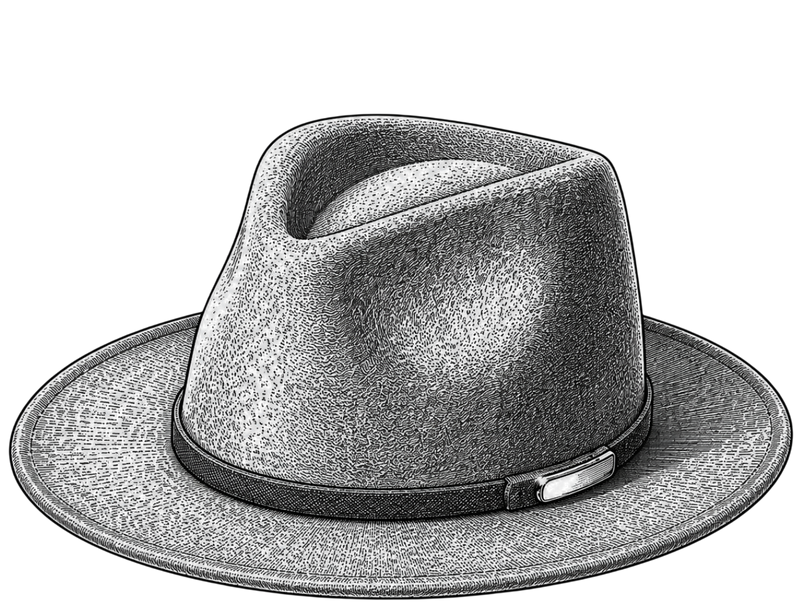
1. The Fedora — The Strongest Choice
A well-fitted fedora on a bald man is one of the most visually cohesive hat combinations available. The structured crown and brim create a complete silhouette above the face — where hair would otherwise provide visual texture, the fedora provides deliberate form. The result reads as intentional rather than compensatory.
The key is fit. On a bald head, a hat that sits too high (too small) or too low (too large) is immediately visible with no hair to obscure the error. The hat should sit 1–2 cm above the ears with the brim at or just above brow level.
Crown guidance: For round faces, a center-dented crown with moderate height. For long faces, a wider-brim style with a lower-profile crown. Avoid very short-brimmed or very narrow-brimmed fedoras — bald heads benefit from the horizontal emphasis of a medium-to-wider brim.
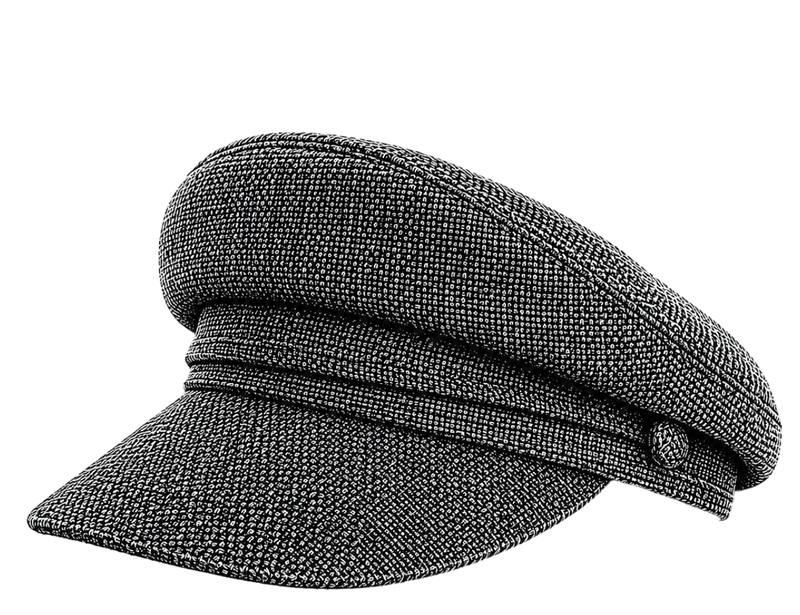
2. The Flat Cap
A flat cap on a bald head works well in casual and smart-casual contexts. The close-fitting construction sits cleanly against the head with no hair gap. A tweed or wool flat cap pairs naturally with the clean lines of a bald head — neither competes with the other.
Proportion note: on a bald head, the flat cap should have some visible crown body — a very flat, low-profile cap can look like it is trying to minimize the hat choice, which reads as self-conscious. A fuller-bodied flat cap reads as more confident.
3. The Wide-Brim Hat (Outdoor Contexts)
A bald head has zero natural UV protection above the face, ears, and scalp. A wide-brim hat in any outdoor context is both a style choice and a genuine health consideration for bald men. UPF-rated wide-brim hats (8–10 cm brim) protect the scalp, face, and ears — areas that bald men burn significantly faster than men with hair.
This is one area where functional and aesthetic considerations align. A wide-brim sun hat or straw fedora protects a bald scalp better than any sunscreen application to the top of the head, which is typically thin and needs reapplication.
4. The Beanie (Winter)
In cold weather, a bald head loses heat rapidly — the scalp is the third-largest heat-loss area on the body after the hands and feet. A wool or thermal beanie provides genuine warmth, not just style. Choose beanies that sit at a natural head height without being pulled too far down over the ears — an overpulled beanie on a bald head looks like the hat is wearing the man.
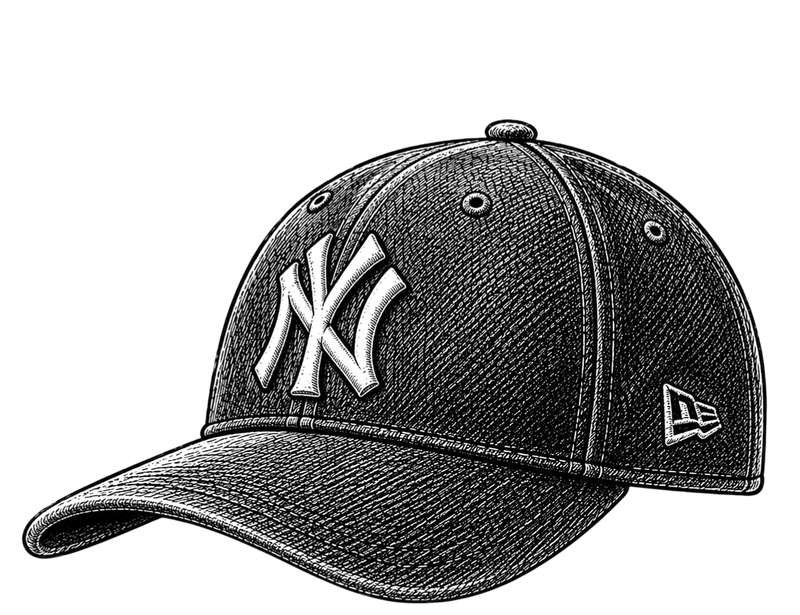
5. The Baseball Cap
The baseball cap works on bald heads in casual contexts. The limitation: on a bald head, the gap between the hat and the head at the rear is more visible than on a hair-filled head, which can look unfinished with very large caps. A correctly fitted cap (not oversized) sits cleanly. Structured caps look cleaner on bald heads than unstructured dad caps.
What to Avoid
- Hats that are too small. On a bald head, a hat that perches rather than sits is immediately obvious. Sizing errors have nowhere to hide. Measure precisely.
- Oversized fitted caps. A large cap that drops low on a bald head looks disproportionate — the cap overwhelms the face without hair to provide context.
- Very shallow, low-profile hats. Hats that barely register on the head — flat caps with minimal crown, very low-profile beanies — can look indecisive on a bald head. A hat that commits to its presence reads better.
- Hats chosen to look like hair. Wigs in hat form. Any hat choice made to compensate for baldness will look like that choice. Choose hats for how they look — not for what they might disguise.
Explore fedoras, flat caps, and wide-brim styles for confident, well-proportioned wear in the Hatloom collection.
Frequently Asked Questions
What hats look best on bald men?
A well-fitted fedora is the strongest choice — it creates a complete, deliberate silhouette above the face where hair is absent. Flat caps work well in casual contexts. Wide-brim hats provide important UV protection as well as strong style. The most important factor across all styles is precise fit — sizing errors are more visible on a bald head than on any other head.
Should bald men avoid certain hat styles?
Avoid hats chosen to compensate for baldness — they read as self-conscious rather than confident. Avoid hats that do not fit precisely, as the error is immediately visible with no hair to obscure it. Beyond these practical points, bald men can wear a wider range of hat styles confidently than most style guides suggest.
Do hats look better on bald men?
In many cases: yes. A hat on a bald head is uncontested — there is no competing visual element above the face. This gives the hat more presence and reads as a stronger, cleaner statement than the same hat worn on a head with hair. The advantage is real — bald men willing to wear hats confidently tend to make a stronger statement with them.
Why is UV protection especially important for bald men?
The scalp has zero natural UV protection without hair cover. A bald scalp receives direct UV radiation in all outdoor conditions and burns faster than facial skin. Scalp skin cancer risk is measurably higher in bald or thinning men than in those with full hair cover. A wide-brim hat (8+ cm) is the most effective scalp UV protection available during sustained outdoor activity.
What hat size do bald men need?
Measure the bare head circumference 1–2 cm above the ears. Bald men have the advantage of the most accurate measurement possible — no hair volume to account for. The measurement is what it is, and hat sizing should match it precisely. Adjustable hats work well; fitted hats should be sized exactly to the bare-head measurement.